 Shipmate - automated shipping software for UK and Republic of Ireland online retailers
“We let Shipmate worry about carrier integrations, whilst we sell worldwide. In practical terms, integrate once with Shipmate, let them code and maintain the APIs, and ship with all the carriers of your choice.
“If you want to change to a new carrier integration, it’s a support-request, not an internal development project.”

Still running shipping through a legacy ERP, WMS, or mainframe system?
Running out of runway on your carrier connections?
Every direct carrier integration has an expiry date – most teams just don't know when.
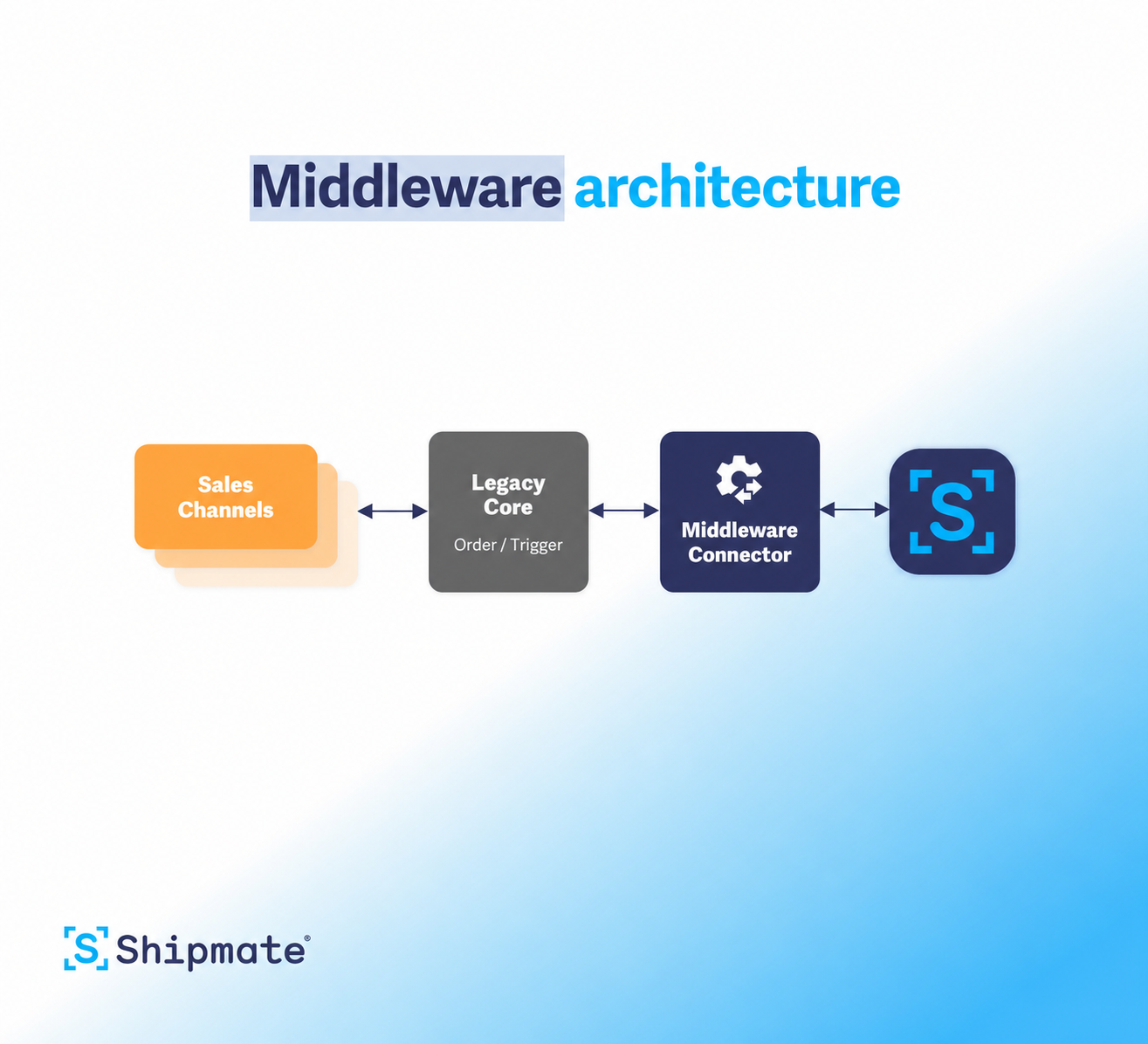
They're built against one carrier, at one point in time. When the carrier changes, a stable process becomes someone else's deadline. On a legacy core, that compounds: every new carrier is a bespoke build, every old one a liability, and the usual fix is an expensive re-platform or a shrinking set of options.
If this sounds familiar, there's a pattern for fixing it – and it's not a rip and replace.
Leading Brands trust Shipmate to modernise their logistics















Get a Technical Integration Audit with our engineering team
We’ll help you map your current constraints against a proven middleware pattern, before you commit to anything.
Get your Technical Audit-
1
You tell us what's running
A short call or written brief on your current setup – core system, carriers, and what's actually forcing the issue.
-
2
We map the constraints
Our engineering team identifies where a middleware layer would sit, and what it would need to solve for.
-
3
You get a straight answer
Whether this is a fit, what it would involve, and a realistic timeline – including against any deadline you're already facing.
Case in point
We're currently bridging a legacy IBM i environment to modern carrier networks for an enterprise retailer, after a direct integration to one of their carriers was given a hard retirement date.
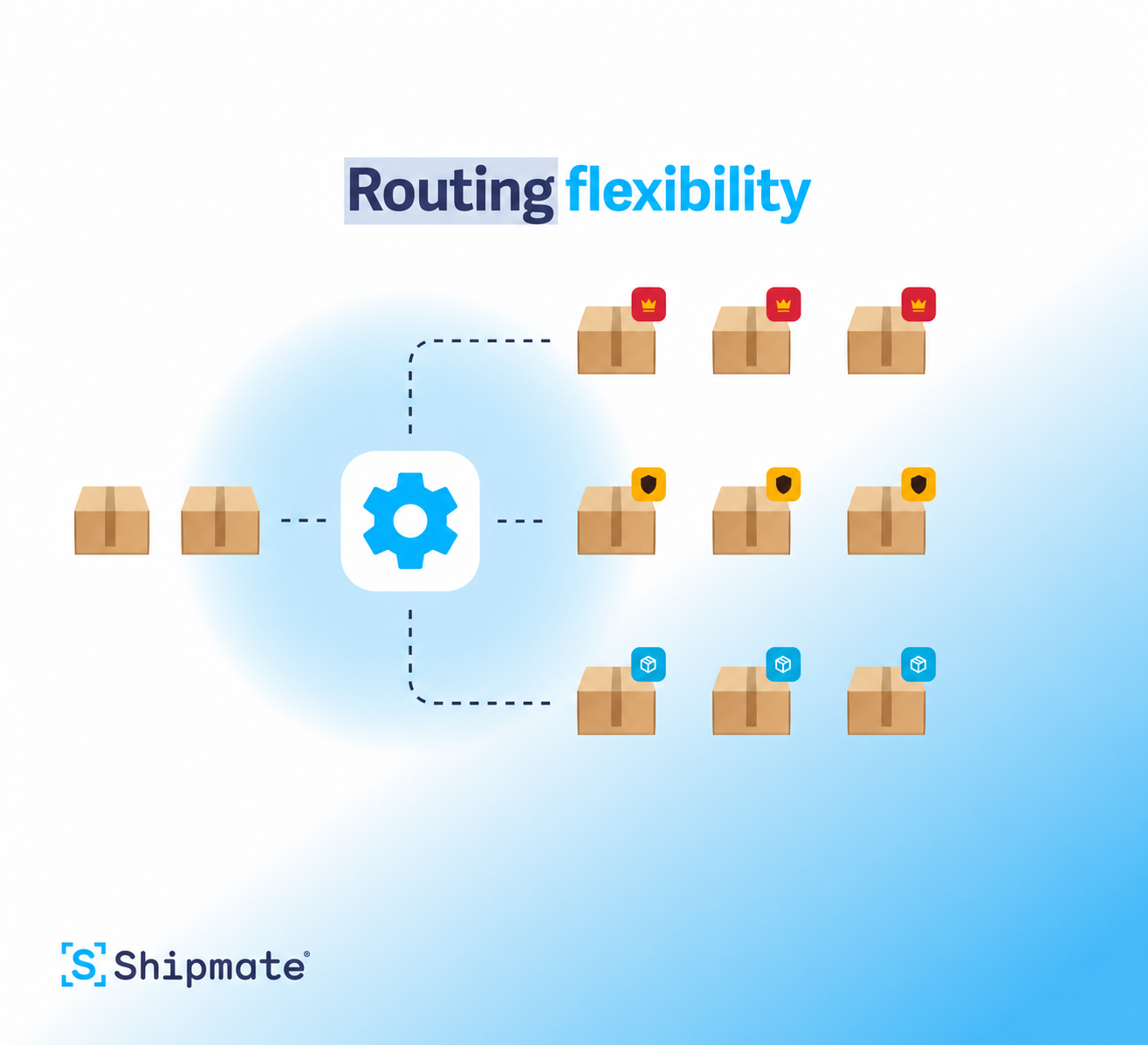
The specific challenge: their fulfilment process runs in batches of up to 2,000 shipments, with carrier selection handled by routing rules – meaning the carrier, and the batch number, isn't known until after a shipment is created.
That required building custom API methods most platforms don't have: updating a batch reference after the fact, and printing whole batches by that reference rather than shipment by shipment.
It's a specific case, but the pattern – a legacy core, a hard deadline, a process that can't tolerate downtime – is one we see across a lot of enterprise operations.



Ready to modernise your logistics stack?
Get a Technical Integration Audit from Shipmate
- A structured session with our engineering team
- Get clarity where our shipping layer sits in your stack
- Visibility on a clear, realistic timescale
- Not a sales call
Get in touch to start the conversation...
What you’re actually getting
What actually changes
| Comparison area | Direct carrier integration | Shipmate |
|---|---|---|
| New carrier setup | Bespoke build per carrier, per project | Add via rules, no new integration |
| When a carrier changes its API | Falls on your dev team, on their timeline | Absorbed at the platform layer |
| Legacy core system | Modified or replaced to accommodate each carrier | Untouched – same triggers, same workflow |
| Batch / routing flexibility | Carrier fixed per batch, hard-coded | Carrier assigned by rule, during shipment creation |
| Document consistency | Varies by channel and carrier | Standardised despatch notes and shipping labels |
| Customer tracking | Often none – support absorbs the queries | Self-serve, branded tracking portal |
| Typical deployment shape | Multi-month rebuild per integration | Weeks, bridged rather than rebuilt |
| Cost profile | New dev cost each time a carrier changes | One-off bridge; four to five figures typically avoided per integration |
Frequently asked questions
-
How long does the audit actually take?
Typically a 30–45 minute call, followed by a short written summary. It's a scoping conversation, not a workshop – we're not going to ask for a day of your team's time before you've even decided if this is worth pursuing.
-
Who will I actually be speaking to?
A senior developer or one of our directors – the same people who'd scope and build the integration, not a salesperson reading from a script.
-
Is there any obligation after the audit?
No. You'll get a clear view of whether this is a fit and what it would involve. If it isn't the right fit, we'll say so.
-
What if we're still months or years away from actually doing this?
It’s still worth having. Most of the value is in understanding where the constraints in your specific stack actually are, so that when it does become urgent – a carrier deprecation, a peak-season limit – you're not starting from zero.
-
Do you only work with IBM i / mainframe environments?
No – that's one example we've solved recently. The pattern applies to most legacy or custom-built cores. If you're not sure whether it's relevant to your setup, that's exactly what the audit call is for.
Latest customer stories






Ready to modernise your logistics stack?
Get a Technical Integration Audit from Shipmate
- A structured session with our engineering team
- Get clarity where our shipping layer sits in your stack
- Visibility on a clear, realistic timescale
- Not a sales call
Get in touch to start the conversation...